
Abraham Maslow
Edit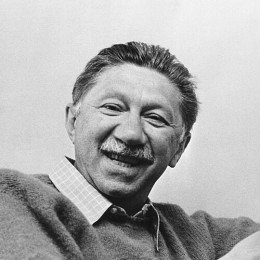 Enlarge Image
Abraham Maslow was an American psychologist whose work on motivation, self-actualization and human potential helped shape humanistic psychology. Best known for the hierarchy of needs, he asked psychologists to study creativity, fulfillment and healthy development alongside distress and disorder. His career combined university teaching, research and influential books.
Explore Related Biographies
Selected for this profile


People Mentioned in This Biography
Early life and education
Abraham Harold Maslow was born on April 1, 1908, in New York City. He earned his bachelor's, master's and doctoral degrees at the University of Wisconsin. His early work included research with psychologist Harry Harlow on primate behavior, a different starting point from the studies of human aspiration for which he later became famous. A professional biography published in the Journal of Humanistic Psychology in 1970 records his Wisconsin teaching fellowship and subsequent Carnegie fellowship at Columbia University.
Maslow joined Brooklyn College in 1937. In 1951, he moved to Brandeis University, where he became the founding chair of its psychology department. He held the chair until 1961 and continued as a professor afterward. Brandeis dates his teaching career there to 1951–1969, a period central to the development of his best-known ideas.
The hierarchy of needs and self-actualization
In his 1943 paper A Theory of Human Motivation, Maslow described physiological needs, safety, love and belonging, esteem, and self-actualization. He proposed that more pressing needs often organize a person's attention before other goals become prominent. Self-actualization concerned developing one's capacities: the activities through which a person could make use of their particular abilities.
The hierarchy is often taught as a pyramid, but the original paper contains qualifications that a simple diagram can obscure. Maslow did not require one need to be completely satisfied before another could matter. He described people as partly satisfied and partly unsatisfied in several areas at once, acknowledged exceptions to the proposed order, and treated behavior as having multiple motivations. These were theoretical proposals about motivation, rather than a fixed checklist for every person's life.
Books and humanistic psychology
Maslow developed his thinking across books and scholarly articles. His major books include Motivation and Personality (1954), Toward a Psychology of Being (1962), and the posthumous The Farther Reaches of Human Nature (1971). The publication dates appear in the bibliography prepared by the Laughlin Foundation and Brandeis University. Together, the works trace an expanding interest in motivation, creativity and the possibilities of human development.
His influence did not mean universal acceptance. In its historical assessment, Brandeis describes colleagues' concerns about the empirical support for his work on self-actualization and peak experiences. That disagreement is part of his intellectual legacy: he helped broaden the questions psychologists asked, while leaving proposals that remained open to criticism and investigation.
Later years and influence
In 1969, Maslow became a resident fellow at the W. Price Laughlin Charitable Foundation in Menlo Park, California. He died there on June 8, 1970, aged 62. His ideas subsequently reached audiences beyond academic psychology. In a November 2005 interview, self-help author Wayne Dyer identified Maslow's psychology as an important influence on his own life and writing.
Portrait: William Carter, published on the dust jacket of The Farther Reaches of Human Nature (1971). The photograph predates Maslow's death in 1970. Source: Wikimedia Commons; public domain in the United States, as a dust-jacket photograph published without a copyright notice. Existing crop by Howardcorn33; reduced preview and website thumbnail.