Alan Greenspan
Edit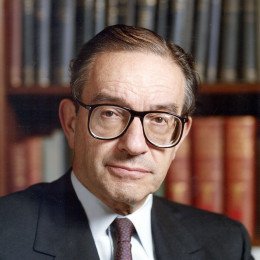 Enlarge Image
Alan Greenspan was an American economist who chaired the Federal Reserve's Board of Governors from 1987 to 2006. His five terms placed him at the center of U.S. monetary policy through economic expansions, recessions and international financial shocks. He died on June 22, 2026, at the age of 100. The Federal Reserve marked his passing with an institutional statement acknowledging his long service and influence. Federal Reserve statement.
Explore Related Biographies
Selected for this profile


People Mentioned in This Biography

Early life and New York University
Greenspan was born in New York City on March 6, 1926. His academic training centered on economics at New York University. NYU's memorial records three degrees: an undergraduate degree in 1948, a master's degree in 1950 and a doctorate in 1977. It also notes his service as an adjunct professor at NYU Stern. New York University's memorial notice; Biographical dates.
Economic consulting and government service
Before leading the central bank, Greenspan analyzed industrial demand and built a career in economic consulting. He led Townsend-Greenspan & Co. during two periods, interrupted by public service. From 1974 to 1977, he chaired President Gerald Ford's Council of Economic Advisers. He later chaired the National Commission on Social Security Reform, bringing economic analysis into policy discussions beyond interest rates and banking. Federal Reserve History biography.
Federal Reserve chairman, 1987–2006
Greenspan took office as Fed chairman on August 11, 1987, and his final term ended on January 31, 2006. Four presidents appointed him to the role. Soon after his arrival, he confronted the October 1987 stock-market crash. His tenure also encompassed recessions, the Asian financial crisis and the economic consequences of the September 11, 2001 attacks. Federal Reserve chronology.
In its 2026 remembrance, the Council on Foreign Relations described a career spanning periods of prosperity and crisis. Greenspan had been a CFR member since 1978 and a board director from 1982 to 1988. Its account illustrates how his influence extended beyond the central bank into broader discussions of economics and international affairs. Council on Foreign Relations remembrance.
The financial crisis and debate over his legacy
Greenspan's reputation became more contested after the financial crisis that unfolded following his departure from the Fed. At an October 2008 congressional hearing, he acknowledged a problem in his expectation that financial institutions' self-interest would adequately protect their shareholders. PBS's transcript documents his testimony and the questioning of regulators about the crisis. His acknowledgment is an important part of the record alongside the praise he received during the earlier economic expansion. PBS transcript of the hearing and discussion.
Wife Andrea Mitchell and later life
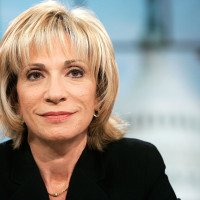
Greenspan was married to NBC journalist Andrea Mitchell. The Federal Reserve's statement following his death offered condolences to her and his family. Their marriage connected two highly visible careers in Washington, one in economic policy and the other in journalism. Federal Reserve memorial statement.
After leaving the Fed, he established Greenspan Associates and published his memoir, The Age of Turbulence, in 2007. His later writing and public appearances continued the discussion of markets and policy that had made him a closely watched official. Federal Reserve History.
Connection with Becky Quick
Greenspan was among the economic leaders interviewed by CNBC anchor Becky Quick. Her Aspen Ideas profile lists him alongside investors and corporate executives she covered, providing a natural connection between his policy career and business-news reporting. Aspen Ideas speaker biography.
Researched and reviewed November 18, 2026. Official portrait: Board of Governors of the Federal Reserve System, public domain, via Wikimedia Commons. Reduced for display.