Alvin Ailey
Edit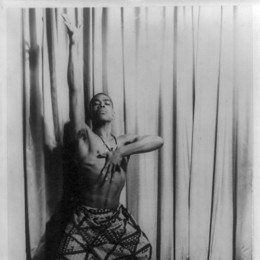 Enlarge Image
Alvin Ailey (1931–1989) was an American dancer, choreographer and institution builder whose work made African American life and cultural traditions central to modern dance. He founded Alvin Ailey American Dance Theater in 1958 and created Revelations, the 1960 ballet that remains one of his signature achievements.
Explore Related Biographies
Selected for this profile


People Mentioned in This Biography

Early life and dance training
Ailey was born on January 5, 1931, in Rogers, Texas. His childhood experiences in the rural South, including church worship, later supplied material for his choreography. After moving to Los Angeles, he encountered concert dance and trained with Lester Horton, encouraged by his friend Carmen de Lavallade. Following Horton’s death in 1953, Ailey led the Lester Horton Dance Theater and developed his own choreography. The AILEY organization’s biography documents these formative years.
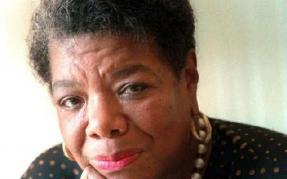
His early career also intersected with that of Maya Angelou. Before her best-known literary achievements, Angelou performed as a dancer; the Television Academy records that she danced with Ailey on stage and on television variety shows.
Revelations and a new dance company
Ailey’s institutional history traces the company and educational programs that gave his choreography an enduring home. Its mission joined the preservation of modern dance with the presentation of African American experience, connecting a particular cultural inheritance with audiences beyond a single community.
Revelations premiered in 1960 at New York. The official repertory page explains its roots in Ailey’s Texas childhood and the Baptist Church. Spirituals, gospel and blues carry its movement through sorrow, religious observance and celebration. The work includes “Wade in the Water” and closes with “Rocka My Soul in the Bosom of Abraham.”
The ballet’s emotional progression helps explain its place in Ailey’s legacy. Rather than separating concert dance from the music and communal experiences that shaped him, he brought those experiences onto the stage. The company continues to perform the work, keeping that connection between memory, movement and music available to new audiences.
Cry and Judith Jamison
In 1971, Ailey created Cry as a birthday gift for his mother. Judith Jamison originated the solo, which unfolds in three parts and was dedicated to Black women, particularly mothers. The company’s account of the work describes a journey through suffering and hardship toward joy.
Its music draws on Alice Coltrane, Laura Nyro and Chuck Griffin. With one dancer carrying the piece’s dramatic arc, Cry offers another way into Ailey’s choreography alongside the ensemble world of Revelations. Both works remain important parts of the company’s repertory.
Education, honors and continuing influence
Ailey established a school in 1969 and a second company in 1974. Originally called the Alvin Ailey Repertory Ensemble, Ailey II provides a bridge between student training and professional performance. Its touring and community appearances extend the educational purpose behind the institution. Sylvia Waters, chosen by Ailey as its first artistic director, led the second company for 38 seasons.
Ailey received Kennedy Center Honors in 1988. He died on December 1, 1989, aged 58, and received the Presidential Medal of Freedom posthumously in 2014. His legacy includes the works themselves and the institutions that continue to train dancers, develop performers and bring choreography to audiences.
Portrait credit: Carl Van Vechten, 1955. Library of Congress, Prints & Photographs Division, Carl Van Vechten Collection, LCCN 2004662477. Portrait source; public-domain rights statement. Full composition resized; no intentional cropping or colorization.