Anwar Sadat
Edit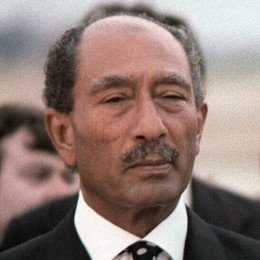 Enlarge Image
Anwar Sadat was president of Egypt from 1970 until his assassination in 1981. A former army officer and member of the Free Officers movement, he led Egypt during the October 1973 war and later negotiated peace with Israel. His presidency combined a major diplomatic realignment with economic change and repression of political opponents.
Explore Related Biographies
Selected for this profile

People Mentioned in This Biography


Early life and rise through Egyptian politics
Mohamed Anwar al-Sadat was born on December 25, 1918, in Egypt's Menufia Governorate. He received a military education and became involved in opposition to British dominance in Egypt. The Norwegian Nobel Institute's historical account records his imprisonment during the Second World War and his participation in the officers' movement that overthrew King Farouk in 1952.
Sadat subsequently held senior posts under Gamal Abdel Nasser. His Nobel biographical record lists work as a newspaper editor, minister, National Assembly leader and vice president before he became president in 1970, following Nasser's death. These roles connected his military background with the institutions of the post-monarchy Egyptian state.
The October 1973 war and a change in alliances
Recovering the Sinai Peninsula, occupied by Israel since the 1967 war, was central to Sadat's foreign policy. In July 1972 he expelled Soviet military advisers, while also seeking an opening to Washington. The State Department's history of the 1973 war traces these diplomatic initiatives alongside the failure to secure an interim settlement with Israel.
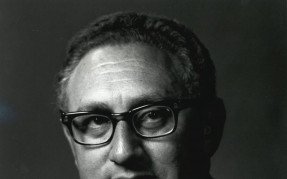
On October 6, 1973, Egyptian and Syrian forces attacked Israeli positions in the Sinai and Golan Heights. Egyptian troops crossed the Suez Canal, but the conflict subsequently turned against the Arab forces before a ceasefire. After the war, U.S. secretary of state Henry Kissinger conducted shuttle diplomacy. His negotiations produced Egyptian-Israeli disengagement agreements in 1974 and 1975, documented in the State Department's diplomatic history.
Jerusalem, Camp David and the Nobel Peace Prize
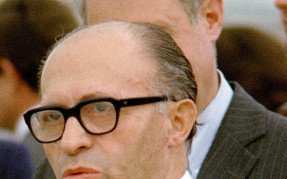
Sadat visited Jerusalem in November 1977 and addressed Israel's parliament, breaking a longstanding diplomatic barrier. During the visit, he and Israeli prime minister Menachem Begin appeared together in an interview with Barbara Walters. The archived ABC interview captures both their willingness to talk and their unresolved differences over territory and Palestinian rights.
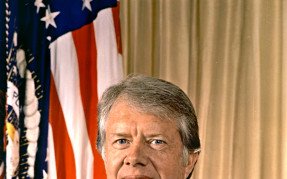
U.S. president Jimmy Carter mediated their September 1978 negotiations at Camp David. The resulting framework agreements preceded the Egypt-Israel peace treaty signed on March 26, 1979. The State Department's Camp David account distinguishes those stages and explains why the wider Palestinian self-government negotiations did not produce a settlement.
Sadat and Begin shared the 1978 Nobel Peace Prize. The Egypt-Israel framework preserved by the Carter Library set out principles including Israeli withdrawal from Sinai, Egyptian sovereignty and the establishment of normal relations after a treaty. The bilateral agreement did not resolve the broader Arab-Israeli conflict.
Economic opening and political repression
At home, Sadat pursued an economic opening known as infitah, moving away from aspects of Nasser's state-led model. In a critical assessment for the Council on Foreign Relations, analyst Steven A. Cook argued that the policy concentrated wealth among people connected to the regime rather than building effective market institutions. Cook also emphasized the coercion used against opponents across the political spectrum.
In September 1981, Sadat launched a sweeping crackdown. UPI's contemporary reporting recorded his announcement that 1,500 people had been arrested, alongside restrictions on religious organizations and the transfer of journalists from their jobs. Sadat presented these measures as necessary to protect national unity; the crackdown also targeted political opposition and intellectuals.
Assassination, writing and legacy
Sadat was assassinated on October 6, 1981, while reviewing a military parade in Cairo. The Associated Press's historical account identifies the attackers as members of Egyptian Islamic Jihad. He was 62. His diplomatic legacy and domestic political record remain distinct parts of the history of his eleven-year presidency.
His books included Revolt on the Nile and In Search of Identity: An Autobiography. The Nobel bibliography records the latter's 1978 publication, offering readers Sadat's own account to consider alongside diplomatic records and critical histories.
Portrait: U.S. Air Force official photograph, 1980, Andrews Air Force Base; individual photographer unidentified. Original file and rights record. Public domain in the United States: U.S. federal government work. Existing Commons crop; further website resizing and thumbnail cropping.