Banjo Matthews
Edit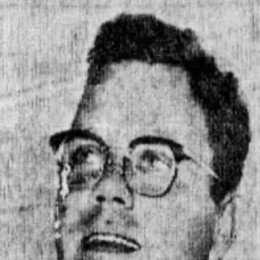 Enlarge Image
Banjo Matthews was an American racing driver, team owner and chassis builder whose cars became a mainstay of NASCAR competition. Born Edwin Keith Matthews, he is remembered especially for the work of Banjo's Performance Center in western North Carolina. His career joined three perspectives on racing: driving a car, running a team and building equipment for other competitors.
Explore Related Biographies
Selected for this profile


People Mentioned in This Biography
Early life and racing career
Matthews was born on February 14, 1932, in Akron, Ohio. According to the Motorsports Hall of Fame of America, he drove his first race at age 15 at Pompano Speedway in Florida and developed his skills in modified racing.
He competed in that division during the 1950s and early 1960s, earning three pole positions and a career-best second-place finish at the 1962 Atlanta 500. In 1963, he stopped driving to concentrate on the mechanical side of the sport. Working on cars became the center of a career that would extend far beyond his own results behind the wheel.
Team ownership and Banjo's Performance Center
The National Motorsports Press Association's Hall of Fame credits Matthews with nine victories as a car owner. His drivers included Fireball Roberts, Junior Johnson, A.J. Foyt, Donnie Allison and Cale Yarborough. That experience placed him alongside some of the leading competitors of his era.
Matthews established his own business in 1970. Based in Arden, near Asheville, North Carolina, Banjo's Performance Center built and repaired race cars for customers. A 1997 retrospective in Hot Rod describes work that extended beyond premier-series machinery to Limited Sportsman, Modified and International Race of Champions cars.
NASCAR chassis and a remarkable winning record
The scale of Matthews's influence is reflected in a statistic highlighted by the NASCAR Hall of Fame: cars from his shop won 262 of the 362 Cup Series races held from 1974 through 1985. His work supported competing teams across the field, so those victories represent the reach of a builder's business rather than the record of a single race team.
Craftsmanship was central to how Matthews described that business. In interviews recalled by Hot Rod, he emphasized giving customers equally good cars and recognized that the teams operating them determined their eventual performance. His shop supplied the foundation; preparation and competition continued after a car left the building.
Historic cars and lasting recognition
Matthews's story also survives through historic vehicles and the collectors who preserve them. In a November 2015 Hemmings Classic Car interview, fellow NASCAR figure Ray Evernham discussed a Ford Torino Talladega in his collection that had previously belonged to Matthews. That account provides a tangible connection between Matthews's era and later efforts to preserve racing history.
Matthews died on October 2, 1996, at age 64. His honors include induction into the National Motorsports Press Association Hall of Fame in 1996 and the Motorsports Hall of Fame of America in 2022. Those institutions recognize a career whose importance encompassed driving, ownership and the less visible work of building the cars that others raced.
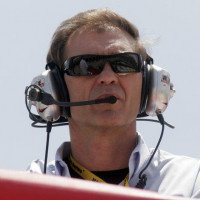
Portrait credit: Banjo Matthews in a photograph published on April 25, 1962, credited by Wikimedia Commons to the Bristol Herald Courier; photographer unknown. Commons identifies the photograph as public domain in the United States because it was published without a copyright notice. Existing Commons crop by Yoblyblob; resized for display, with no additional editorial cropping or retouching.