Christof Koch
Edit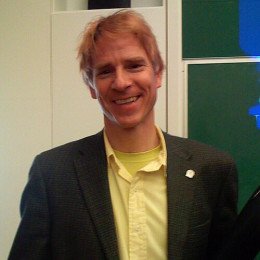 Enlarge Image
Christof Koch is a neuroscientist whose research examines how activity in the brain relates to conscious experience. His career has combined computational studies of neurons, experimental work on perception and public writing about the mind. He is a Meritorious Investigator at the Allen Institute and Chief Scientist of the Tiny Blue Dot Foundation.
Explore Related Biographies
Selected for this profile

People Mentioned in This Biography
Education and the move into neuroscience
Koch’s early education spanned several countries. In his autobiographical account, he describes growing up in a German household and completing a French baccalaureate at the Lycée Descartes in Rabat, Morocco, in 1974. He subsequently studied physics and philosophy in Tübingen, Germany.
He completed doctoral research at the Max Planck Institute for Biological Cybernetics in 1982, then spent four years as a postdoctoral researcher at the Massachusetts Institute of Technology. That training connected physical and mathematical approaches with questions about biological information processing.
Koch joined the California Institute of Technology in 1986. Caltech’s divisional history identifies his appointment in Computation and Neural Systems, then a new interdisciplinary area. He remained on the faculty until 2013, ultimately holding the Lois and Victor Troendle professorship in Cognitive and Behavioral Biology.
Work with Francis Crick
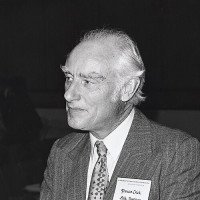
A major part of Koch’s career developed through his collaboration with Francis Crick. Beginning in the late 1980s, they sought ways to turn questions about awareness into experimental problems, with particular attention to vision and the activity of nerve cells.
Their 1990 paper, “Towards a neurobiological theory of consciousness,” proposed visual awareness as a tractable subject for research. It connected attention and short-term memory with hypotheses about coordinated neuronal activity. These were proposals to investigate, rather than a completed explanation of consciousness.
The collaboration continued through further theoretical work, including “A framework for consciousness” in 2003. Koch’s interest in the neural correlates of consciousness centers on identifying the brain mechanisms associated with particular experiences, while distinguishing those experiences from other processing that takes place without awareness.
Allen Institute and current research roles
Koch joined the Allen Institute for Brain Science as Chief Scientific Officer in 2011 and became its President in 2015. The institute’s professional biography describes work on neurons, cortical cell types and the relationship between brain activity and perception.
He stepped down from executive responsibilities in 2023 and continued scientific work at the institute, where his current title is Meritorious Investigator. The Tiny Blue Dot Foundation also identifies him as its Chief Scientist. These appointments are distinct from his earlier leadership of the Allen Institute for Brain Science.
Books and theories of consciousness
Koch has written for both technical audiences and general readers. Consciousness: Confessions of a Romantic Reductionist, published in 2012, combines an account of scientific research with memoir and philosophical reflection.
In The Feeling of Life Itself (2019), he presents his argument for an account of experience based on integrated information theory, associated with Giulio Tononi. He also questions whether computation alone can produce consciousness. These are theoretical positions he advances in the book, rather than settled conclusions about every biological or artificial system.
Then I Am Myself the World followed in 2024 through Basic Books. It continues his examination of consciousness and altered experience, extending a career that connects laboratory research with broader questions about the nature of the mind.
Portrait credit
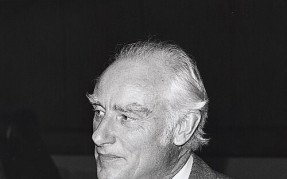
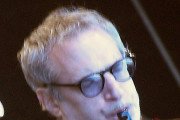
Photograph: Romanpoet, January 28, 2008, via Wikimedia Commons. The photographer released the work into the public domain. Existing Commons crop and resized preview; no additional editorial retouching. The site may resize or crop it for display.