Jane Goodall
Edit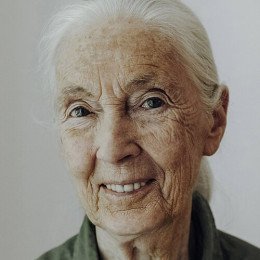 Enlarge Image
Jane Goodall was an English ethologist and conservationist whose long-term research on wild chimpanzees changed scientific and public understanding of animal behaviour. She founded the Jane Goodall Institute and the Roots & Shoots youth programme, later becoming a global advocate for wildlife, habitats and community-led conservation. Goodall died on October 1, 2025, aged 91, after a career that connected field research with education and public action.
Explore Related Biographies
Selected for this profile
People Mentioned in This Biography
Early life and the journey to Gombe
Goodall was born Valerie Jane Morris-Goodall on April 3, 1934, in London and grew up in Bournemouth, England. In 1957 she travelled to Kenya, where she met palaeoanthropologist Louis Leakey. The Royal Anthropological Institute’s account of her life describes how Leakey employed her and helped secure support for her chimpanzee research.
She began that fieldwork on July 14, 1960, at Gombe in what is now Tanzania. She was 26 and had not completed an undergraduate degree. Her work required patient observation of animals that initially avoided her. Over time, following recognizable individuals helped her document relationships, personalities and changes across their lives.
Chimpanzees, tools and scientific training
Among Goodall’s most influential observations was watching chimpanzees modify plant stems and use them to obtain termites. The Jane Goodall Institute identifies tool manufacture and use as a central discovery of her early research. She also became known for giving individual chimpanzees names, including David Greybeard, Flo and Fifi.
Her approach challenged some scientific conventions of the time, particularly in describing individual animals’ personalities and emotions. She went on to undertake doctoral research at Cambridge under zoologist Robert Hinde. The university’s Department of Zoology history records her doctorate and supervision. Her combination of detailed life histories and continued observation contributed to a research programme that outlasted her own daily fieldwork.
The Jane Goodall Institute and Roots & Shoots
Goodall founded the Jane Goodall Institute in 1977. Its work expanded from chimpanzee research to habitat protection, rescued animals and conservation led with local communities. She increasingly travelled to explain how threats to wildlife were connected to the lives and livelihoods of people living near protected areas.
In 1991 she established Roots & Shoots, encouraging young people to design projects benefiting people, animals and the environment. The United Nations’ remembrance describes the programme’s international reach and her appointment as a UN Messenger of Peace in 2002. Her public work brought conservation concerns to audiences far beyond research institutions.
Books, public communication and influence
Goodall communicated through books, documentaries, interviews and lectures as well as scientific publications. Her books included The Book of Hope: A Survival Guide for Trying Times, identified in the institute’s biography among her writing for adults and children. Hope and personal responsibility became recurring themes in her public message.
Her influence reached people who later pursued their own wildlife careers. Veterinarian Dr. Michelle Oakley recalled meeting Goodall at a zoo book signing when she was 11 and telling her that she wanted to work with wildlife. Oakley described the encounter in a Lioness Magazine interview.
Honours, death and legacy
Goodall’s honours included appointment as a Dame Commander of the Order of the British Empire and the U.S. Presidential Medal of Freedom in 2025. Her institute announced her death in Los Angeles on October 1, 2025, while she was in the United States for a speaking tour.
Research at Gombe and the institute’s conservation and youth programmes continue her work. The UN tribute places that legacy across science, environmental protection and humanitarian engagement: a body of work concerned with both understanding other animals and improving the conditions in which people and wildlife live.
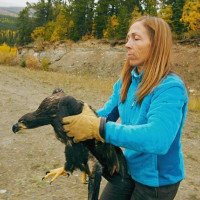
Photo: Johanna Lohr. Wikimedia Commons source; CC BY-SA 4.0. Photographed June 23, 2019, for Steingarts Morning Briefing. Full photograph resized for display and the automatic site thumbnail; image adaptations use the same license.