Mahalia Jackson
Edit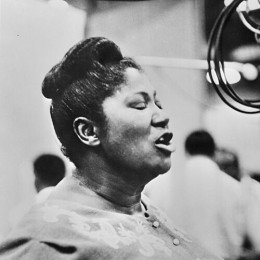 Enlarge Image
Mahalia Jackson was an American gospel singer whose powerful contralto helped bring Black sacred music to an international audience. Known as the Queen of Gospel, she built a career in recordings, concerts, radio and television while supporting the civil rights movement. Her performances became closely associated with the public campaigns and spiritual life of that movement.
Explore Related Biographies
Selected for this profile
People Mentioned in This Biography
Early life and the move to Chicago
Jackson was born on October 26, 1911, in New Orleans, Louisiana. She grew up singing in a Baptist church, developing her voice within a religious community rather than through a conventional conservatory education. The Library of Congress’s account of her early life traces her childhood and the church music that shaped her work.
She moved to Chicago as a teenager and continued singing in churches. Her career developed alongside the city’s expanding gospel tradition, including the work of composer Thomas A. Dorsey. The Rock & Roll Hall of Fame’s historical essay describes her musical development, her determination to remain a gospel performer and her growing professional opportunities.
Recordings and international recognition
Her first major-label recordings were made in 1937. A decade later, she recorded Move On Up a Little Higher for Apollo. That performance became her breakthrough hit, reaching listeners beyond the established gospel audience. Robert F. Darden’s National Recording Registry essay explains the circumstances of the 1947 recording and its importance to her career.
The recording was added to the registry in 2005. Jackson’s success demonstrated the commercial reach of gospel while retaining the expressive intensity of church performance. She appeared in major concert venues and later hosted radio and television programs in Chicago. The Stanford King Institute’s biography documents the growth of her public career alongside her commitment to racial justice.
Music and the civil rights movement
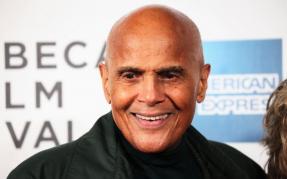
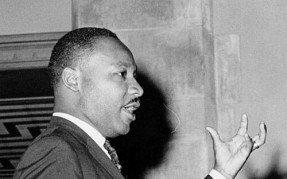
Jackson supported Martin Luther King Jr. and the Southern Christian Leadership Conference through performances and fundraising. She sang at the 1957 Prayer Pilgrimage for Freedom and at the 1963 March on Washington for Jobs and Freedom. Her place in those events reflected the role of religious music in sustaining collective action, as the King Institute’s history of songs in the movement explains. Other professional supporters included Harry Belafonte.
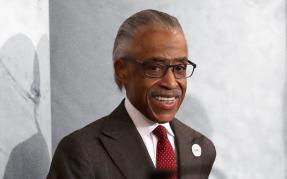
At the March on Washington, her singing preceded King’s address. The institute’s research on the march’s musical program documents her contribution and King’s subsequent gratitude. She later sang at his funeral in 1968. Her influence also reached younger performers and speakers: Al Sharpton toured with Jackson as a child, according to his encyclopedia biography.
Awards, death and continuing legacy
The Recording Academy’s awards record lists three Grammy wins: Everytime I Feel the Spirit in 1962, Great Songs of Love and Faith in 1963 and the posthumous How I Got Over award in 1977. Jackson died on January 27, 1972, aged 60. Her recordings continued to circulate and receive recognition after her death.
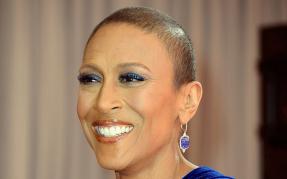
She was inducted into the Rock & Roll Hall of Fame in 1997. Her life was also portrayed in the 2021 television film Robin Roberts Presents: Mahalia, starring Danielle Brooks. Lifetime’s production page identifies Robin Roberts as an executive producer. Such projects reflect continuing interest in Jackson’s music and her contribution to the civil rights struggle.
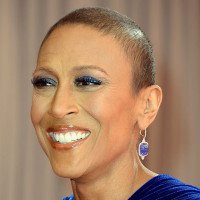
Portrait: Unknown photographer, Anefo/Nationaal Archief, photograph dated September 27, 1971, archive reference924-9807. CC0 1.0 public-domain dedication. Existing Commons crop and slight rotation by Jeff5102; resized Commons derivative; site thumbnails may be cropped. Original Commons file page; CC0 1.0 public-domain dedication.