Moss Hart
Edit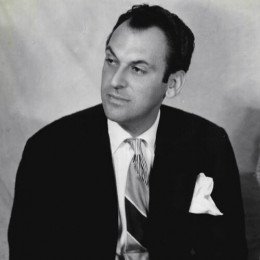 Enlarge Image
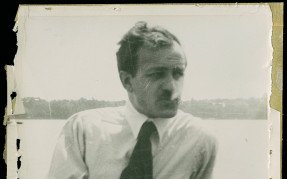
Moss Hart was an American playwright, theater director and screenwriter whose career ranged from Broadway comedies to major musicals. He collaborated with George S. Kaufman on You Can't Take It With You, directed the original production of My Fair Lady, and told the story of his early theatrical ambitions in Act One. His honors included a shared Pulitzer Prize and a Tony Award for directing.
Explore Related Biographies
Selected for this profile
People Mentioned in This Biography
Early Life and Education
Hart was born on October 24, 1904, in New York City. He grew up in a family with little money and developed a love of theater, encouraged by his Aunt Kate. According to Lincoln Center Theater's biographical resource guide, he left school after the eighth grade and worked in a fur warehouse before finding employment in a theatrical producer's office.
That producer, Augustus Pitou Jr., staged Hart's early play The Beloved Bandit in 1924, but it failed. Hart subsequently gained experience directing amateur theater and organizing entertainment at resorts in the Catskills and Poconos. These jobs gave him practical experience with performers and audiences before his Broadway breakthrough.
Plays with George S. Kaufman
Hart's partnership with the established writer George S. Kaufman began with Once in a Lifetime, a comedy that reached Broadway in 1930. They revised Hart's script together, turning his early effort into the success that established him professionally.
The partnership produced Merrily We Roll Along (1934), You Can't Take It With You (1936) and The Man Who Came to Dinner (1939). The Pulitzer Prizes' official record names Hart and Kaufman's You Can't Take It With You as the 1937 Drama winner. Its award year followed its original Broadway opening.
The Broadway League's credits also document Hart's independent work, including Light Up the Sky, which he both wrote and directed in 1948. His career thus extended beyond the celebrated Kaufman partnership.
Musicals and My Fair Lady
Hart wrote the book for Lady in the Dark, working with composer Kurt Weill and lyricist Ira Gershwin. The musical opened in 1941. Later, Hart directed the original Broadway production of Alan Jay Lerner and Frederick Loewe's My Fair Lady, which opened in 1956.
He won the 1957 Tony Award for directing My Fair Lady. He also staged the original Camelot, which opened in 1960. These productions illustrate another part of his contribution to musical theater: shaping a show in performance as well as writing material for the stage.
Film Writing and Wartime Work
Hart's screenwriting included Hans Christian Andersen (1952) and the 1954 version of A Star Is Born, starring Judy Garland. PBS's Broadway biography places these films alongside his extensive theater work.
During World War II, he collaborated with Ben Hecht on We Will Never Die. The pageant was staged at Madison Square Garden on March 9–10, 1943, and later in other American cities. The United States Holocaust Memorial Museum describes its role in a campaign to bring attention to Europe's Jews and press for American rescue action.
Act One and Later Adaptations
Published in 1959, Hart's autobiography Act One recounts his childhood, his struggle to enter the theater and the making of his first Broadway hit. Its publisher's description emphasizes the long path between his early ambitions and that first successful opening night.
James Lapine later adapted the memoir for the stage. The licensed play's production history records its opening at Lincoln Center Theater's Vivian Beaumont Theater on April 17, 2014. This adaptation introduced Hart's account of becoming a playwright to audiences through a new theatrical work.
Marriage, Death and Legacy
Hart married performer Kitty Carlisle in 1946; they remained married until his death. He died on December 20, 1961, in Palm Springs, California, aged 57. His plays and memoir continued to provide material for later productions, including the musical Merrily We Roll Along, which is based on the original Hart–Kaufman play.
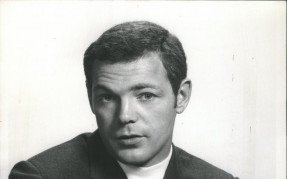
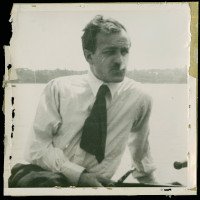
Portrait credit: Vandamm Studio, New York, 1940. Wikimedia Commons source and rights documentation. Public domain in the United States through publication without a copyright notice; public-domain information. Commons crop and automatic tonal correction; resized derivative, no additional retouching.