Peter Weir
Edit Enlarge Image
Peter Weir is an Australian film director and screenwriter whose work helped bring the Australian New Wave to international audiences. His major films include Picnic at Hanging Rock, Gallipoli, Witness, Dead Poets Society, The Truman Show and Master and Commander: The Far Side of the World.
Explore Related Biographies
Selected for this profile

People Mentioned in This Biography
Early life and filmmaking beginnings
Weir was born on August 21, 1944, in Sydney, Australia. He briefly attended the University of Sydney before traveling to Europe in 1965. After returning to Australia, he worked in television and then as a director at the Commonwealth Film Unit from 1969. The Venice Film Festival's biographical account traces this progression into independent feature filmmaking.
Australian films and international recognition
His first feature was The Cars That Ate Paris (1974), which he also wrote. He followed it with Picnic at Hanging Rock (1975). The National Film and Sound Archive's fiftieth-anniversary account describes the latter's critical and popular success and its importance in establishing his international reputation.
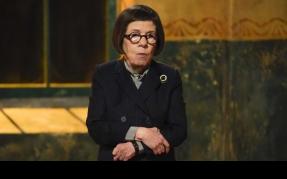
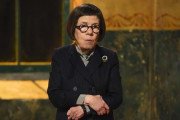
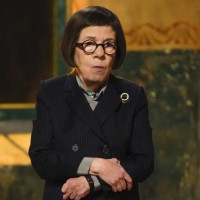
Weir continued with The Last Wave (1977) and the World War I drama Gallipoli (1981). In The Year of Living Dangerously (1982), he directed Linda Hunt as photographer Billy Kwan. Hunt won the supporting-actress Oscar at the 1984 Academy Awards for that performance. Her role is a notable example of the acting work associated with his films.
Witness, Dead Poets Society and The Truman Show
In Witness (1985), Weir directed Harrison Ford as police detective John Book. The American Film Institute's catalog records the cast and production, including the film's work in Lancaster, Pennsylvania. The film brought Weir his first Academy Award nomination for directing.
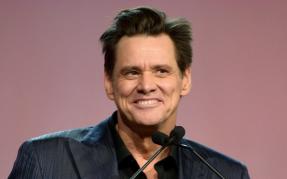
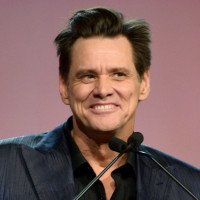
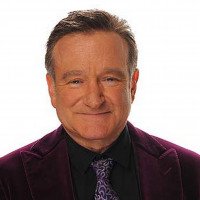
He later directed Robin Williams as teacher John Keating in Dead Poets Society (1989), whose credits are documented by the AFI. In The Truman Show (1998), Jim Carrey played Truman Burbank, the central figure in a constructed television world. The AFI's film record credits Weir as director and Andrew Niccol as writer.
Other features included Green Card (1990), Fearless (1993), the seafaring Master and Commander: The Far Side of the World (2003) and The Way Back (2010). His work encompassed mysteries, historical dramas, romantic comedy and stories about people confronting unfamiliar communities or environments.
Academy Award and later honors
The Academy's career summary identifies directing nominations for Witness, Dead Poets Society, The Truman Show and Master and Commander, plus nominations for writing Green Card and producing Master and Commander. The Academy's Honorary Award record lists Weir as a 2022 recipient. Venice awarded him its Golden Lion for Lifetime Achievement in 2024.
Weir retired from directing in 2024, as reported by The Guardian. On June 10, 2026, he received the inaugural Lifetime Achievement Award from the Australian Film Television and Radio School at the Sydney Film Festival. The school's account of the presentation records his conversation with Rob Carlton and his reflections on a lifetime of filmmaking.
Portrait: Peter Weir in Kraków, April 8, 2011, photograph by Piotr Drabik, via Wikimedia Commons. Licensed CC BY 2.0. Site resizing and thumbnail cropping; no additional editorial alteration.