Jinping Xi
Edit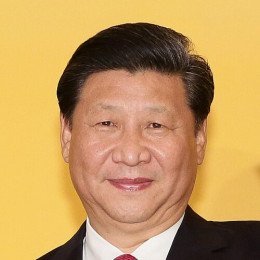 Enlarge Image
Xi Jinping is a Chinese politician who leads the Communist Party of China and serves as president of the People’s Republic of China. He became the party’s general secretary and chairman of its Central Military Commission in 2012, then assumed the state presidency in 2013. His authority combines leadership of the ruling party, the armed forces and the head-of-state office.
Explore Related Biographies
Selected for this profile

People Mentioned in This Biography
Early life, age and education
Xi was born on June 15, 1953, in Beijing. He was 73 in November 2026. In the Chinese ordering of his name, Xi is the family name and Jinping the given name. His ancestral home is in Fuping County, Shaanxi, a distinction from his birthplace recorded in Brookings’ biographical profile.
During the Cultural Revolution, he spent years as a “sent-down youth” in rural Shaanxi. He joined the Communist Party in 1974 and studied chemical engineering at Tsinghua University from 1975 to 1979. Later, he completed part-time postgraduate study in Marxist theory and ideological and political education. His official Chinese government biography records a Doctor of Law degree from Tsinghua.
Provincial career and rise to national leadership
After working as a secretary to senior official Geng Biao, Xi moved into local administration in Hebei. His subsequent career included positions in Xiamen, Ningde and Fuzhou, followed by leadership responsibilities in Fujian and Zhejiang. In 2007, he briefly led the party organization in Shanghai before joining the Politburo Standing Committee in Beijing.
He became China’s vice president in 2008. His elevation to the party’s top position in 2012 followed decades within its provincial and national institutions. That background helps explain why his career cannot be understood solely through the presidential title familiar to audiences outside China.
Party leadership, presidency and term limits
The Congressional Research Service’s March 2026 account of China’s political system describes the Communist Party as the dominant institution, with party leaders outranking their government counterparts. Xi’s position at the head of the party and its military commission is therefore central to his power.
In March 2018, the National People’s Congress removed the constitution’s two-consecutive-term limit for the state presidency. Reuters’ contemporary report explains that the amendment allowed him to remain president beyond the previous limit. It did not create a fixed lifetime term. He secured a third party leadership term in 2022 and a third presidential term in March 2023.
Governance, discipline and the Belt and Road Initiative
Xi’s leadership has emphasized party authority and discipline. Anti-corruption investigations have reached senior civilian and military officials; the CRS account also documents the broad institutions through which the party directs political life. The campaign is part of a governing system in which control over appointments, security and public messaging is concentrated within the party hierarchy.
Internationally, one of his signature programmes is the Belt and Road Initiative. He proposed its overland and maritime components in 2013. The government’s 2015 framework sets out plans for infrastructure, trade and economic connections across participating countries. It is a statement of the programme’s aims, rather than an independent evaluation of every project’s results.
Human rights and international scrutiny
His period in power has also brought intense scrutiny of state policies in Xinjiang. An August 2022 assessment by the UN human-rights office found serious violations affecting Uyghurs and other predominantly Muslim communities. It concluded that the extent of arbitrary and discriminatory detention, together with wider restrictions, might constitute international crimes, particularly crimes against humanity.
China rejected the assessment, disputing its evidence and defending its policies as counter-terrorism measures. The UN assessment is a documented human-rights finding, rather than a criminal conviction of Xi.
Diplomacy and studies of his worldview
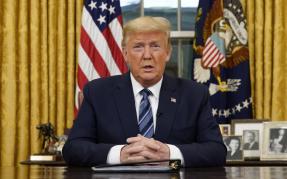
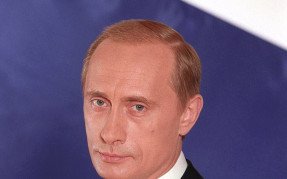
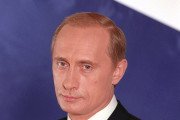
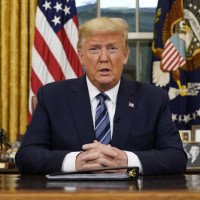
Xi remained China’s president in November 2026. Associated Press’s reporting on the APEC meetings in Shenzhen described his talks with U.S. President Donald Trump and Russian President Vladimir Putin, illustrating his continuing role in relations among major powers.
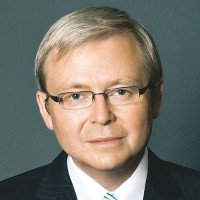
Former Australian prime minister Kevin Rudd examined Xi’s ideology in On Xi Jinping: How Xi’s Marxist Nationalism Is Shaping China and the World, published by Oxford University Press in 2024. Rudd’s interpretation connects Marxist-Leninist ideas and nationalism with changes in Chinese domestic and foreign policy. It is an attributed scholarly argument, useful alongside official records and independent reporting.
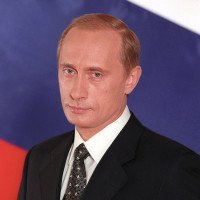
Portrait: Chien Chih-hung / Office of the President, Republic of China (Taiwan), Singapore, November 7, 2015. Original portrait file and rights record; source meeting photograph. CC BY 2.0 Generic. Existing Commons crop by Gindomarlo (2020), downloaded as a 500-pixel derivative; further website resizing and thumbnail cropping.