Yasser Arafat
Edit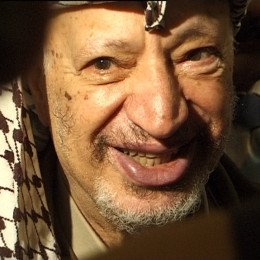 Enlarge Image
Yasser Arafat was a Palestinian political leader who chaired the Palestine Liberation Organization, led Fatah and became the first president of the Palestinian Authority. Also known as Yasir Arafat and Abu Ammar, he was a central figure in the Palestinian national movement. His career encompassed armed struggle, international diplomacy, the Oslo peace process and a deeply contested political legacy.
Explore Related Biographies
Selected for this profile


People Mentioned in This Biography


Early life, education and Fatah
Arafat was born in 1929. Cairo is the birthplace generally given in biographical accounts, although he identified with Jerusalem and the details of his birth have been disputed. He studied civil engineering at the university now known as Cairo University and became involved in Palestinian student politics. A biographical account published in Nobel Lectures, edited by Irwin Abrams, traces his move from engineering work in Egypt to Kuwait, where he also ran a contracting business.
In the late 1950s, Arafat and associates established Fatah, a movement committed to Palestinian national liberation through armed struggle. The Norwegian Nobel Committee's historical account describes its development from a guerrilla organization into a leading force within the PLO. That history included attacks against Israel and the use of terrorism by groups within the broader movement, an essential part of the controversy surrounding his leadership.
Leadership of the PLO and years in exile
Arafat became chairman of the PLO's executive committee in 1969. The organization operated from successive bases outside the Palestinian territories. After expulsion from Jordan, its leadership moved to Lebanon; following Israel's invasion of Lebanon in 1982, Arafat relocated to Tunis. These years made exile, armed organization and diplomacy overlapping parts of his political career.
His public audiences sometimes included visitors outside conventional diplomacy. In his own account of a 1980 visit to West Beirut, American evangelist Arthur Blessitt described meeting Arafat while traveling with a cross. The encounter is recorded as Blessitt's personal recollection.
Oslo Accords and the Nobel Peace Prize
In 1988, Arafat announced the PLO's recognition of Israel's right to exist and rejection of terrorism. The shift opened a path toward negotiations. The September 1993 Oslo agreement provided for limited Palestinian self-government, while postponing questions including borders, refugees and Jerusalem. Arafat's public handshake with Israeli Prime Minister Yitzhak Rabin at the White House became the best-known image of that diplomatic opening.
The U.S. State Department's history of the Oslo process explains that Israel recognized the PLO as the Palestinians' representative and the PLO recognized Israel. Arafat, Rabin and Israeli Foreign Minister Shimon Peres shared the 1994 Nobel Peace Prize for their efforts toward peace in the Middle East. The award recognized a negotiating breakthrough; a final settlement had yet to be reached.
Palestinian Authority presidency
Arafat returned to Gaza in 1994 and headed the newly established Palestinian Authority. He then won the presidential election held on January 20, 1996. The Palestinian Central Elections Commission's official results record 88.2 percent of the vote for Arafat against Samiha Khalil. The election also chose an 88-member legislative council, marking a new phase of Palestinian self-government under the interim agreements.
Attempts to reach a permanent agreement continued under U.S. President Bill Clinton. The July 2000 Camp David summit ended without a settlement, with major differences remaining over territory, Jerusalem and refugees. Renewed Israeli-Palestinian violence followed later that year. Arafat's remaining years were increasingly constrained by conflict and his confinement at his Ramallah headquarters.
Final years, criticism and death
His authority was challenged internationally as well as within Palestinian politics. In a June 24, 2002, speech, U.S. President George W. Bush called for new Palestinian leadership and institutional reform, criticizing the existing authorities over terrorism, corruption and accountability. These were the administration's stated reasons for seeking a different negotiating partner.
Arafat died in a hospital near Paris on November 11, 2004, aged 75, and was buried in Ramallah. Contemporary ABC/Reuters reporting recorded his death with Palestinian statehood still unrealized. His career remains inseparable from both the international recognition of Palestinian national aspirations and the violence, governance failures and unfinished diplomacy of the conflict.
Portrait credit: Yasser Arafat in Copenhagen, May 3, 1999, photographed by Hans Jørn Storgaard Andersen. Released into the public domain worldwide by the creator. Website resizing and thumbnail cropping.