George S. Kaufman
Edit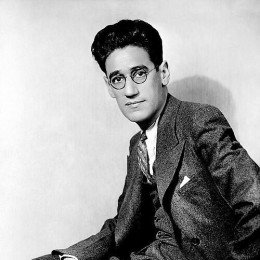 Enlarge Image
George S. Kaufman was an American playwright, theater director and humorist whose work helped define Broadway comedy between the world wars. His collaborators included Moss Hart, Edna Ferber, Marc Connelly and Morrie Ryskind. He shared two Pulitzer Prizes for Drama and later won a Tony Award for directing Guys and Dolls.
Explore Related Biographies
Selected for this profile

People Mentioned in This Biography
Background and Journalism
Kaufman was born on November 16, 1889, in Pittsburgh, Pennsylvania. Before establishing himself as a playwright, he worked in journalism. His estate's account of his early career describes encouragement from columnist Franklin Pierce Adams and newspaper work in Washington and New York.
He joined the New York Times in 1917 and became its drama editor, remaining in the position until 1930. His reporting and reviewing career therefore overlapped with his emergence as a successful writer for the stage. He also became associated with the Algonquin Round Table's circle of writers and performers.
Plays with Connelly and Ferber
Kaufman's partnership with Marc Connelly produced Dulcy (1921), followed by works including Merton of the Movies (1922) and Beggar on Horseback (1924). Another collaboration, To the Ladies (1922), featured Helen Hayes.
With Edna Ferber, Kaufman wrote The Royal Family (1927), Dinner at Eight (1932) and Stage Door (1936). The estate's history of these partnerships distinguishes their subjects: an acting family, society during the Depression, and the experiences of aspiring actresses. These plays extended his work beyond a single comic formula.
The Marx Brothers and Musical Satire
Kaufman also helped create stage material for the Marx Brothers. The Cocoanuts opened in 1925 with music and lyrics by Irving Berlin; Animal Crackers followed in 1928. Kaufman and Ryskind subsequently wrote the screenplay for A Night at the Opera (1935), as documented in the estate's account of his Marx Brothers work.
His political musical Of Thee I Sing reached Broadway in 1931. The 1932 Pulitzer Prize record names Kaufman, Morrie Ryskind and Ira Gershwin as the Drama winners for the show. Composer George Gershwin was not among the named recipients. The award was a landmark for musical theater.
Collaboration with Moss Hart
Kaufman and Hart's Once in a Lifetime became a Broadway success in 1930. Their subsequent plays included Merrily We Roll Along (1934), You Can't Take It With You (1936) and The Man Who Came to Dinner (1939).
They shared the 1937 Pulitzer Prize for You Can't Take It With You. Hart later described the making of their first hit in his memoir Act One. The Kaufman estate's partnership history also explains that the original Merrily We Roll Along was a play; the Sondheim musical adaptation came decades later.
Directing and Later Work
Kaufman's work as a director continued beyond these writing partnerships. He staged the original Guys and Dolls, which opened in 1950, and won the 1951 Tony Award for directing.
Other collaborations included the book for Seven Lively Arts (1944), written with Ben Hecht. The Broadway League's credits record this work alongside his later plays and directing assignments. He also appeared on the television program This Is Show Business.
Family, Death and Literary Legacy
Kaufman was married to Beatrice Kaufman until her death in 1945. He married Leueen MacGrath in 1949; that marriage ended in divorce in 1957. He died in New York City on June 2, 1961.
His work remains available through theatrical publishers and collected editions. The Library of America includes his collaborations in Kaufman & Co.: Broadway Comedies, preserving plays written with several of his major partners.
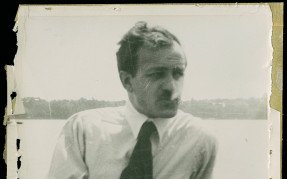
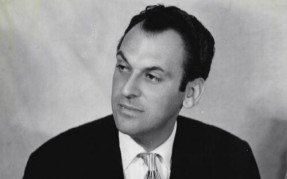
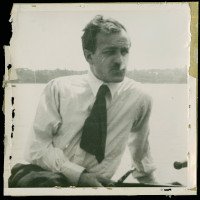
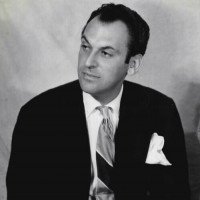
Portrait credit: Vandamm, published by The Theatre Magazine Company in Theatre Magazine, October 1930, page 27. Source and public-domain documentation; public-domain information. Existing Commons crop, resized for display; no additional retouching.