John F. Kennedy
Edit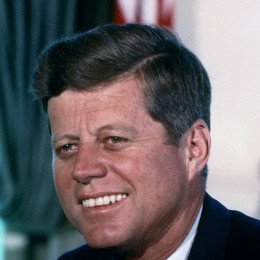 Enlarge Image
John F. Kennedy was the 35th president of the United States, serving from January 1961 until his assassination in November 1963. A Democrat from Massachusetts and a former naval officer, he promoted public service and an ambitious space program while confronting civil-rights struggles and dangerous Cold War crises.
Explore Related Biographies
Selected for this profile

People Mentioned in This Biography
Early life, education and naval service
John Fitzgerald Kennedy was born on May 29, 1917, in Brookline, Massachusetts. Known within his family as Jack, he was the second of Joseph and Rose Fitzgerald Kennedy's nine children. The National Archives biography describes an affluent upbringing accompanied by recurring health problems, followed by military service and electoral politics.
Kennedy graduated from Harvard University in 1940. During the Second World War he served in the U.S. Navy, commanding a patrol torpedo boat in the Pacific. His boat was sunk by a Japanese destroyer. The House of Representatives' biographical record documents his education, naval service from 1941 to 1945 and subsequent congressional career.
Congress, books and the 1960 election
Kennedy won election to the House in 1946 and served there from 1947 to 1953. He then represented Massachusetts in the Senate from 1953 to 1960. He married Jacqueline Bouvier in 1953, during the period in which he was building a national political reputation.
His published books included Why England Slept and Profiles in Courage. The latter received the 1957 Pulitzer Prize in Biography. Its portraits of political decision-making became an enduring part of Kennedy's public identity alongside his speeches and campaigns.
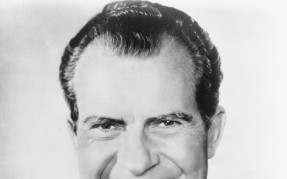
In 1960, Kennedy defeated Republican vice president Richard Nixon in the presidential election. At 43, he became the youngest person elected to the presidency, a distinction recorded by the National Archives. He took office on January 20, 1961, with Lyndon B. Johnson as vice president.
Public service, civil rights and the Moon program
On March 1, 1961, Kennedy signed the executive order establishing the Peace Corps. The original order and archival history explain the program's combination of overseas assistance and mutual understanding between Americans and people in other countries. Congress formally authorized it that September.
Civil rights became an increasingly urgent domestic issue. Kennedy sent Congress a proposed civil-rights bill on June 19, 1963. The Senate's legislative chronology traces the proposal, the struggle to pass legislation and the Civil Rights Act signed by President Johnson in July 1964. Kennedy did not live to see that law enacted.
Kennedy also committed the country to landing astronauts on the Moon and returning them safely before the decade ended. NASA's account of his space policy describes the technical advice supplied by figures including Wernher von Braun and the substantial funding that followed Kennedy's May 1961 announcement. Apollo 11 achieved the lunar landing in July 1969.
Cuba, nuclear diplomacy and Vietnam
His foreign-policy record included a serious early failure. Kennedy approved the CIA-backed Bay of Pigs invasion of Cuba in April 1961, but Cuban forces defeated the exile force. The State Department's history also describes the subsequent Operation Mongoose campaign aimed at destabilizing Fidel Castro's government.
In October 1962, the discovery of Soviet nuclear missile installations in Cuba brought the United States and Soviet Union close to war. Kennedy imposed a naval quarantine while pursuing negotiations. The State Department's crisis account records the resolution: Soviet missile withdrawal, an American pledge not to invade Cuba and a private understanding concerning the removal of U.S. missiles from Turkey.
Kennedy's administration also expanded American military involvement in South Vietnam. Historian Marc J. Selverstone's Miller Center assessment records approximately 16,000 American military advisers there by the end of his presidency. It cautions that announced reductions did not necessarily mean a reduced U.S. commitment. What Kennedy would have done had he lived remains uncertain.
Alongside these confrontations, Kennedy pursued limits on nuclear testing. In 1963, the United States, Britain and Soviet Union reached an agreement restricting tests in the atmosphere, underwater and in space. This diplomatic initiative formed another part of a presidency shaped by both military rivalry and the search for ways to reduce its risks.
Assassination and historical record
Kennedy was assassinated in Dallas, Texas, on November 22, 1963, aged 46. Johnson succeeded him as president. Kennedy was buried at Arlington National Cemetery, and his papers and other records became central sources for studying his life and administration.
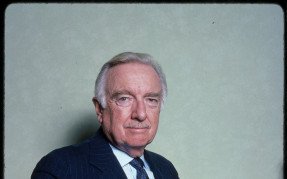
At CBS, Walter Cronkite announced Kennedy's death, an episode preserved in the network's archival account.
The National Archives' assassination records collection brings together investigative documents, photographs, recordings and other historical materials. Those records complement the wider evidence of Kennedy's legislation, diplomacy, military decisions and appeal to public service.
Portrait: Cecil Stoughton, White House, July 11, 1963. Original file and rights record. Public domain in the United States: U.S. federal government work. Existing Commons lighting adjustment, minor spot cleanup and crop; further website resizing and thumbnail cropping.