Louisa May Alcott
Edit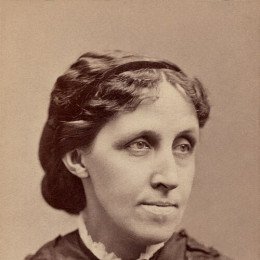 Enlarge Image
Louisa May Alcott was an American writer whose books joined family life, women’s ambitions and the practical demands of earning a living. She is best known for Little Women and its sequels, but her career also encompassed poetry, fairy tales, sensational fiction and writing drawn from her Civil War nursing experience.
Explore Related Biographies
Selected for this profile


People Mentioned in This Biography

Early life and education
Alcott was born on November 29, 1832, in Germantown, Pennsylvania. Her parents were educator Amos Bronson Alcott and Abigail May Alcott. She grew up with three sisters, Anna, Elizabeth and May, in a household that combined intellectual activity with persistent financial difficulties.
The Library of Congress’s research guide describes the family’s connections with Concord writers and thinkers, including Ralph Waldo Emerson, Henry David Thoreau, Nathaniel Hawthorne and Margaret Fuller. Her education took place largely at home. Books, conversation and the reform ideas circulating around her family formed an important background to her writing.
At Hillside, the Concord home now called The Wayside, Alcott and her sisters wrote and staged plays. The National Park Service connects those childhood performances with episodes she later transformed into fiction. The family’s experiences supplied material for Little Women, without making the novel a literal record of every event.
Writing for a living and Hospital Sketches
Before literary success made her financially secure, Alcott worked in several occupations, including teaching, sewing and household service. Orchard House’s biography records the publication of her first book, Flower Fables, in 1854. Writing was both an imaginative pursuit and a way to help support her family.
Her work reached audiences beyond children’s literature. She published stories under pen names including A. M. Barnard and Flora Fairfield. As the Library of Congress explains, she wrote in popular sensational and sentimental forms as well as under her own name, responding to the opportunities available in the periodical market.
During the Civil War, Alcott served as a nurse in Washington, D.C. Her letters home became the basis of Hospital Sketches (1863), bringing her observations of wartime nursing to readers. This experience belongs to the professional history behind her writing, alongside the domestic settings for which she became better known.
Little Women and later books
At her publisher’s request, Alcott wrote a story for girls that became Little Women. The first volume appeared in 1868, followed by a second in 1869. The March sisters’ different temperaments, work and choices gave readers several paths through a story shaped by affection and economic pressure.
She wrote the first part at Orchard House in Concord, using a desk built by her father. Jo March drew on aspects of Alcott’s own character, but the novel’s importance also rests on its wider portrait of sisters developing separate ambitions within a shared family.
Alcott continued publishing after that success. Her later books included An Old-Fashioned Girl (1870), Little Men (1871), Eight Cousins (1875) and Jo’s Boys (1886). The National Park Service’s Orchard House record documents this continuing body of work.
Reform, death and continuing readership
Alcott supported women’s suffrage. The National Park Service’s history of voting rights in Massachusetts identifies her as Concord’s first woman to register after women gained the right to vote for school committee members in 1879. That limited local franchise was distinct from the nationwide constitutional change achieved decades after her death.
She died on March 6, 1888, and was buried in Concord’s Sleepy Hollow Cemetery. Orchard House preserves a setting closely associated with her life and work, while her books continue to reach readers through new editions and adaptations.
Among those adaptations is Greta Gerwig’s Little Women (2019), with Saoirse Ronan as Jo. Sony Pictures’ production description explains that the film draws on both the novel and Alcott’s other writings, connecting her literary career with a later generation of filmmakers.
Portrait credit
Photograph: George Kendall Warren, circa 1870, Library of Congress, Liljenquist Family Collection, ppmsca.53264. Restoration by Adam Cuerden, who permits unrestricted reuse of the restoration. Wikimedia Commons source; public domain. Resized Commons preview; no additional retouching. The site may resize or crop the portrait for display.