Sanford Weill
Edit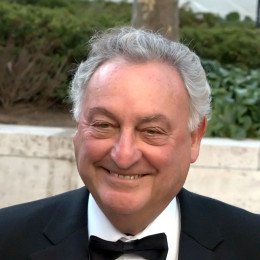 Enlarge Image
Sandy Weill, formally Sanford I. Weill, is an American financier and philanthropist best known for helping build Citigroup. His business career linked brokerage, insurance and commercial banking through a succession of acquisitions. After leaving executive leadership, he concentrated increasingly on educational, cultural and medical philanthropy through the Weill Family Foundation and institutional board service.
Explore Related Biographies
Selected for this profile

People Mentioned in This Biography
Early life and education
Weill was born on March 16, 1933. He graduated from Cornell University in 1955 and began his financial career as a runner at Bear Stearns before becoming a broker. A NAF-published interview and biographical introduction describes those early steps and the transition from brokerage work into a much broader career in financial services.
From brokerage to Travelers Group
In 1960, Weill and three partners founded the brokerage that became a predecessor of Shearson. American Express acquired Shearson Loeb Rhoades in 1981, bringing Weill into the company, where he became president. He later led Commercial Credit, which expanded through acquisitions involving Primerica, Travelers and Salomon. NAF's career biography records the sequence of businesses that became the Travelers Group.
One important colleague was Jamie Dimon. A JPMorgan Chase merger filing preserved by the SEC records Dimon's work as Weill's assistant at American Express from 1982 to 1985, followed by senior financial roles at Commercial Credit and Primerica. Their professional connection helps explain how the same executives worked across several of the firms that were later combined.
Creating Citigroup
Weill was leading Travelers when he and Citicorp chairman John Reed agreed to combine their businesses in 1998. Citigroup's own history of the transaction dates the public announcement to April 6. The combination brought together consumer finance, insurance, securities operations and international banking in a single financial group.
The merger became closely associated with the financial-supermarket model. Citi's historical account also identifies the expected repeal of Glass-Steagall's restrictions separating commercial and investment banking as important to the transaction's rationale. The legislation changing that framework was signed in 1999. Weill retired as Citigroup chief executive in 2003 and left its non-executive chairmanship in 2006.
Changing views on large banks
His later public views complicated that legacy. In a July 2012 CNBC interview, Weill argued that investment banking should be separated from traditional banking and that institutions should avoid putting taxpayers at risk. Reuters reporting published by Insurance Journal documented the position as a reversal from the consolidation strategy with which he had been associated. It remains an important distinction between his earlier business model and his later policy argument.
Education, medicine and the arts
Weill also helped develop career-focused education through NAF. The organization's history of its academy network dates the first Academy of Finance at Brooklyn's John Dewey High School to 1982. Its model connects high-school study with career preparation, professional experience and employer participation.
His philanthropy has often been undertaken with his wife, Joan Weill. In January 2026, the University of California announced a $120 million gift through their family foundation to UC Davis' veterinary school. The university renamed the school in their honor. It said the commitment would support a new small-animal teaching hospital and fundamental and clinical research, including work connecting animal and human health.
Their university support extends beyond that gift. In October 2025, the Weills received the UC Presidential Medal in recognition of service and philanthropy across the system. Berkeley's institutional biography also identifies his roles with the Weill Family Foundation, Carnegie Hall and Weill Cornell Medicine. Those commitments place education, scientific research and the arts alongside banking in the later chapters of his public life.
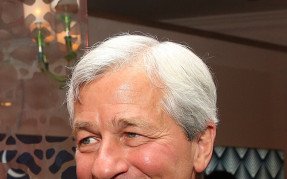
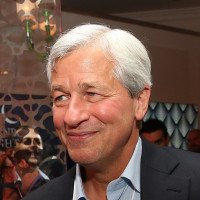
Portrait credit: Sanford Weill at the Metropolitan Opera, September 21, 2009, photographed by David Shankbone, CC BY 3.0. Existing Wikimedia Commons version with levels and colors adjusted in 2020; website resizing and thumbnail cropping.