Kurt Weill
Edit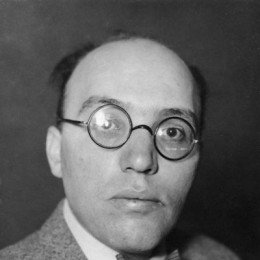 Enlarge Image
Kurt Weill was a German-born American composer whose work ranged from the musical theater of Weimar Germany to Broadway. His best-known works include The Threepenny Opera, Lady in the Dark and Street Scene. He composed the music for songs including Mack the Knife and September Song, and won a Tony Award for his Street Scene score.
Explore Related Biographies
Selected for this profile

People Mentioned in This Biography
Early Life and Musical Education
Weill was born on March 2, 1900, in Dessau, Germany, the son of a cantor. He showed an early interest in composition and gained practical theatrical experience as an accompanist. The Kurt Weill Foundation's biography traces his studies with Albert Bing, his enrollment at the Berlin Hochschule für Musik, and his later training in Ferruccio Busoni's composition master class.
Before becoming established as a stage composer, Weill supported himself through several kinds of musical work, including teaching, conducting and music criticism. This practical background accompanied his formal study and his growing interest in creating music for dramatic performance.
Brecht and The Threepenny Opera
Weill began working with Bertolt Brecht on Mahagonny, a songspiel first performed in 1927. Their full-length opera Rise and Fall of the City of Mahagonny followed in 1930. These were distinct works, rather than two titles for the same production.
The Threepenny Opera premiered in Berlin on August 31, 1928. The Foundation's work catalogue identifies it as a play with music after John Gay's The Beggar's Opera, by Brecht and Weill in collaboration with Elisabeth Hauptmann. Its opening ballad became widely known in English as Mack the Knife. Weill supplied the music, working with literary collaborators on the dramatic text and lyrics.
Exile and American Citizenship
Weill left Germany in 1933 as Nazi hostility and restrictions disrupted performances of his work. He worked in Paris before traveling to the United States in 1935. Schott Music's biography and chronology document this move and his subsequent American career. He became a US citizen in 1943.
Broadway, Lady in the Dark and Songs
In America, Weill developed new partnerships for the musical stage. Knickerbocker Holiday (1938), written with Maxwell Anderson, introduced September Song. His American work continued the practice of collaborating closely with playwrights and lyricists while adapting to a new theatrical setting.
For Lady in the Dark, Weill composed the music, Ira Gershwin wrote the lyrics, and Moss Hart wrote the book and directed. The Foundation's works chronology records the Broadway opening on January 23, 1941. The musical placed its songs in dream sequences within a story involving psychoanalysis.
His wartime work included music for We Will Never Die, the 1943 pageant associated with Ben Hecht and staged by Hart at Madison Square Garden. This work used theater to call attention to the persecution of Europe's Jews.
Street Scene and Later Works
Street Scene opened on Broadway in 1947, drawing on Elmer Rice's play and bringing Weill together with Rice and poet Langston Hughes. It was presented as an American opera. The official Tony Awards record names Weill as the 1947 winner for Original Musical Score.
Later stage works included Love Life (1948), with Alan Jay Lerner, and Lost in the Stars (1949), with Maxwell Anderson. His catalogue also includes orchestral, chamber and vocal music alongside the works written for theatrical performance.
Lotte Lenya, Death and Legacy
Weill married singer and actress Lotte Lenya in 1926. They divorced in 1933 and remarried in 1937. She was closely associated with performances of his music and later with preserving his work. Weill died in New York City on April 3, 1950, aged 50.
The Kurt Weill Foundation for Music, chartered in 1962, preserves and promotes the legacies of Weill and Lenya through research, publications and support for performances.
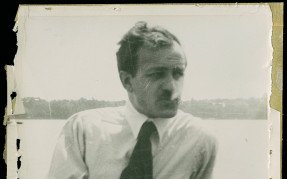
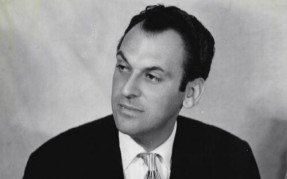
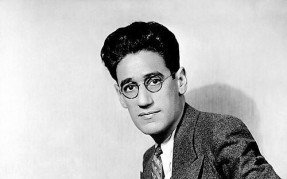
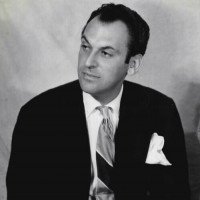
Portrait credit: Bundesarchiv, Bild 146-2005-0119 / CC-BY-SA 3.0. Unknown photographer, 1932. Source and archive information; CC BY-SA 3.0 Germany. Existing Commons JPEG cleanup and crop; display thumbnail resized and cropped. Image derivatives retain this license.