Woody Shaw
Edit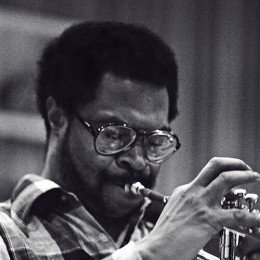 Enlarge Image
Woody Shaw was an American jazz trumpeter, composer and bandleader known for demanding compositions and a distinctive approach to improvisation. His albums include Blackstone Legacy, The Moontrane and Rosewood. Alongside his recording career, he taught younger musicians and helped carry the language of modern jazz trumpet into a new generation.
Explore Related Biographies
Selected for this profile
People Mentioned in This Biography

Early life and musical training
Shaw was born on December 24, 1944, in Laurinburg, North Carolina, and grew up in Newark, New Jersey. His father was a gospel singer, and music was part of his childhood. He began on bugle before studying trumpet with teacher Jerome Ziering. The official Shaw biography describes his classical training and attendance at Newark's Arts High School. Although encouraged to pursue further classical study, he developed a strong interest in jazz and began working professionally as a teenager.
Early recordings and work in Europe
Shaw worked with percussionist Willie Bobo and saxophonist Eric Dolphy during the early 1960s. Dolphy's music encouraged him to develop his own harmonic ideas. He subsequently spent time in Europe, performing with musicians including Bud Powell, Kenny Clarke and Nathan Davis. These experiences connected the Newark musician with an international jazz community.
After returning to the United States, he worked with Horace Silver and appeared on recordings including The Cape Verdean Blues and organist Larry Young's Unity. The Blue Note career account also describes his work with Andrew Hill, Jackie McLean and other musicians who were expanding the possibilities of small-group jazz. Among his influences were Miles Davis, Clifford Brown and John Coltrane.
Albums as a bandleader
During the 1970s, Shaw established a substantial catalogue under his own name. Blackstone Legacy and Song of Songs preceded recordings for Muse, including The Moontrane and Little Red's Fantasy. He later recorded for Columbia, where Rosewood helped bring his music wider attention and earned a Grammy nomination. Further Columbia projects included Stepping Stones, Woody III, For Sure! and United.
His recordings combined elaborate original writing with improvisation and carefully chosen collaborators. Mosaic Records' documentation of his Muse sessions brings together work from different periods, from an early session with Joe Henderson and Herbie Hancock to later ensembles featuring Cedar Walton and Kenny Garrett. The collection represents nine original albums across seven discs, showing the breadth of his work beyond any single recording.
Teaching, later career and legacy
Shaw continued touring and recording during the 1980s, including collaborations with fellow trumpeter Freddie Hubbard. His groups also provided opportunities for younger players, among them trombonist Steve Turre and pianist Mulgrew Miller. Blue Note's retrospective places those working bands alongside his recordings as part of his influence on subsequent jazz musicians.
Teaching was another direct part of that influence. His official biography identifies Chris Botti among the musicians who received National Endowment for the Arts support to study with him during the 1980s. It also documents international workshops and clinics. Shaw died on May 10, 1989, aged forty-four. His recordings and the work of musicians he mentored remain central to the legacy preserved by his family and record labels.
Portrait credit
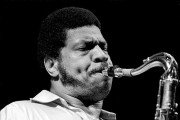
Photo: Tom Marcello. Wikimedia Commons source; CC BY-SA 2.0. Preview resized for display and automatic site thumbnail crop; image adaptations under the same license.