George Gershwin
Edit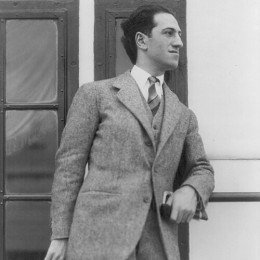 Enlarge Image
George Gershwin was an American composer and pianist whose music connected Broadway, popular song, the concert hall and opera. His major works include Rhapsody in Blue, Concerto in F, An American in Paris and Porgy and Bess. With his older brother Ira Gershwin, he created songs and theatrical scores that became enduring parts of American musical life.
Explore Related Biographies
Selected for this profile


People Mentioned in This Biography
Early Life and Musical Training
Gershwin was born in Brooklyn, New York, on September 26, 1898, to Russian immigrant parents. He developed an early interest in the piano and studied with Charles Hambitzer. Rather than completing high school, he entered the music business as a teenage song plugger, demonstrating sheet music to prospective buyers.
The Gershwin estate's biography dates his move into Tin Pan Alley work to 1914. His song Swanee, with lyrics by Irving Caesar, became an early breakthrough after Al Jolson took it up in 1919. This success preceded the concert works for which he later became equally well known.
Rhapsody in Blue and Concert Music
Rhapsody in Blue received its first public performance at New York's Aeolian Hall on February 12, 1924. Gershwin played the solo piano part with Paul Whiteman's orchestra. The Library of Congress's account identifies Ferde Grofé as the arranger who scored the accompaniment for that performance, distinguishing the composition from its original orchestration.
Gershwin followed it with Concerto in F (1925), commissioned by conductor Walter Damrosch for the New York Symphony Society, and An American in Paris (1928). His work for the concert stage developed alongside his songwriting and theater career rather than replacing them.
Broadway with Ira Gershwin
The brothers' Lady, Be Good! opened in 1924. Their later shows included Oh, Kay!, Funny Face and Girl Crazy. The Library of Congress describes their complementary roles: George composed the music and Ira wrote the lyrics.
For Of Thee I Sing (1931), the brothers worked with book writers George S. Kaufman and Morrie Ryskind. The 1932 Pulitzer Prize for Drama named Kaufman, Ryskind and Ira as its recipients. George, the composer, was not included in that award.
Porgy and Bess and Summertime
Porgy and Bess opened on Broadway on October 10, 1935. Its creators drew on DuBose Heyward's novel Porgy and the stage adaptation by DuBose and Dorothy Heyward. The official work catalogue credits both Heywards alongside George and Ira.
George composed the opera's music, with a libretto by DuBose Heyward and lyrics by Heyward and Ira. Songs from the work include Summertime. The collaboration joined operatic scale with the brothers' experience in American song and musical theater, while giving the Heywards an essential role in its dramatic and literary creation.
Hollywood, Death and Recognition
George and Ira also wrote for Hollywood, including Shall We Dance and A Damsel in Distress, both released in 1937. George was working on The Goldwyn Follies when he became seriously ill. He died from a brain tumor in Hollywood on July 11, 1937, aged 38.
In 1998, the centennial of his birth, he received a special posthumous Pulitzer citation recognizing his contributions to American music. The George and Ira Gershwin Collection at the Library of Congress preserves manuscripts, lyric sheets, correspondence and other records of their work.
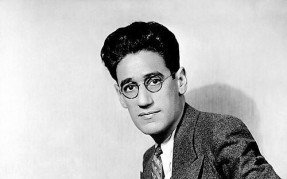
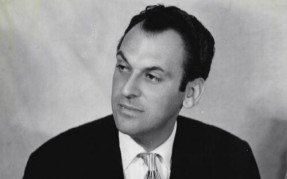
Portrait credit: Bain News Service, unidentified photographer; Library of Congress, LC-USZ62-54141, undated. Original catalogue record and rights advisory; Wikimedia Commons source. Public domain (PD-Bain); the Library reports no known restrictions on publication. Public-domain information. Resized derivative; no additional retouching.