Al Jolson
Edit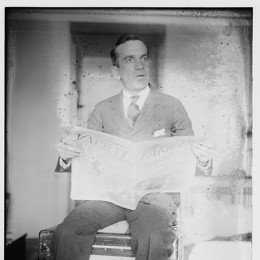 Enlarge Image
Al Jolson was a singer, comedian and actor whose career stretched from touring vaudeville and Broadway to recordings, radio and early sound films. His performances of Swanee and his starring role in The Jazz Singer made him a major figure in American entertainment. His legacy also includes his extensive association with blackface, a performance tradition built on racist stereotypes.
Explore Related Biographies
Selected for this profile

People Mentioned in This Biography
Early Life and Vaudeville
Jolson was born Asa Yoelson in Seredžius, in present-day Lithuania, and moved to the United States with his family in 1894. He grew up in Washington, D.C., where his father was a cantor. American National Biography dates his birth to May 26, 1886; some accounts give a different year, reflecting uncertainty in the early record.
He entered professional entertainment around the turn of the twentieth century, working in touring acts and vaudeville. His elder brother Harry was among his early performing partners. After developing his act on the road, he became a prominent attraction at New York's Winter Garden Theatre in 1911.
Broadway, Songs and Swanee
Jolson's stage manner combined powerful singing with comedy and direct engagement with an audience. He could move between sentimental ballads and brisk popular songs, stretching a performance through spoken asides and vocal improvisation. James M. Manheim's biographical account describes ramps that allowed him to get close to theatergoers, an important part of his appeal before microphones became standard.
His repertoire included California, Here I Come, Rock-a-Bye Your Baby with a Dixie Melody and My Mammy. A particularly consequential song was Swanee, composed by George Gershwin with lyrics by Irving Caesar. Jolson added it to his show Sinbad and recorded it for Columbia in January 1920.
Cary O'Dell's National Recording Registry essay explains how the recording's success helped establish Gershwin's career while extending Jolson's fame. The 1920 recording entered the registry in 2004. The connection illustrates Jolson's role as an interpreter who could bring a songwriter's work to a much larger public.
The Jazz Singer and Sound Films
Jolson starred in Warner Bros.' The Jazz Singer, which premiered on October 6, 1927. He played a young performer caught between his ambition for the stage and the expectations of his cantor father. The film joined musical performance with a story of Jewish family life and assimilation.
The description of it as the first talking movie needs qualification. Film historian Ron Hutchinson's essay identifies it as the first successful synchronized feature with talking. Much of it remained silent, with recorded accompaniment; its singing and brief dialogue sequences helped accelerate Hollywood's adoption of sound. Jolson followed it with The Singing Fool in 1928.
Blackface and Historical Legacy
Blackface was part of Jolson's stage and screen work, including The Jazz Singer. It cannot be separated from the racial caricature at the center of minstrelsy. The Smithsonian's history of blackface explains how the form distorted African American appearance, language and culture and helped spread dehumanizing stereotypes. That history is essential context for evaluating his performances alongside their musical and technological importance.
Later Career and Death
Jolson continued recording and broadcasting and entertained American troops during World War II and the Korean War. His singing supplied the voice for Larry Parks's portrayal of him in The Jolson Story (1946) and Jolson Sings Again (1949). He died in San Francisco on October 23, 1950, shortly after returning from Korea.
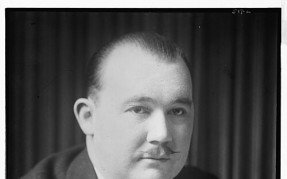
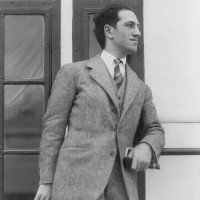
Portrait credit: Bain News Service, publisher; unidentified photographer. Library of Congress, LC-DIG-ggbain-30355, circa 1915–1920. Original catalogue and rights advisory; Wikimedia Commons source. Public domain (PD-Bain); the Library reports no known restrictions on publication. Public-domain information. Resized Commons derivative; no additional retouching.